Drudge Retort: The Other Side of the News

Drudge Retort

Menu

Subscriptions

Drudge Retort RSS feed RSS Feed

Links

Recent Comments

Recent comments from all news stories on this site. Users must follow the site's moderation policy. Personal attacks, profanity, abusive conduct and expressions of prejudice are not allowed. If you want to retrieve a comment of yours that was recently deleted, visit your user page and click the Moderation link.

I saw article like this that seemed to be quite more likely ...

Two days in Iran: the small device that helped US forces locate, rescue the downed F-15E navigator
www.ynetnews.com

... US navigator hid for 48 hours in hostile territory, sending encrypted signals through a satellite-linked survival device that allowed rescuers to track him without detection, showcasing advanced combat search and rescue technology deep inside Iran ...

But, what do I know?

@#9

From that article ...

... On February 11, Israeli Prime Minister Benjamin Netanyahu arrived at the White House with a clear objective: persuade US President Donald Trump that the time had come to strike Iran. Inside the Situation Room, in a tightly controlled and highly classified setting, Netanyahu delivered a detailed military and intelligence briefing.

Flanked virtually by Israel's top security officials, he laid out a compelling case for immediate action. Iran, he argued, was vulnerable. Its defenses could be dismantled, its leadership targeted, and its regime weakened to the point of collapse.

Trump's response was brief but decisive. "Sounds good to me." That moment set the United States on a path toward war.

Within hours, US intelligence agencies began evaluating the Israeli proposal. Their conclusions were sharply different.

American officials agreed that targeted military strikes could degrade Iran's capabilities. But the broader goal of regime change was dismissed as unrealistic.

CIA Director John Ratcliffe described that aspect of the plan as "farcical." Secretary of State Marco Rubio was even more direct: "In other words, it's --------."

Rubio clarified his position in strategic terms. Limited military objectives were achievable. Regime change was not. "If our goal is regime change or an uprising, we shouldn't do it. But if the goal is to destroy Iran's missile program, that's a goal we can achieve."

The debate within Trump's inner circle revealed deep divisions, not over whether Iran posed a threat, but over how far the United States should go.

Vice President JD Vance emerged as the most consistent voice of caution. He warned that a full-scale war could spiral unpredictably, destabilize the region, and strain American resources. "You know I think this is a bad idea, but if you want to do it, I'll support you."

Rubio, meanwhile, took a pragmatic middle ground, skeptical of diplomacy but cautious about escalation.

Defense Secretary Pete Hegseth argued the opposite. In his view, confrontation with Iran was inevitable. If conflict were coming, delaying it would only raise the cost.

Warnings from military and political advisers

Behind the scenes, concerns extended beyond strategy. White House Chief of Staff Susie Wiles worried about the broader consequences, economic shocks, rising oil prices, and the risk of another prolonged conflict in the Middle East.

Military leaders raised operational concerns. A war with Iran could deplete US weapons stockpiles and expose vulnerabilities in global supply chains. Securing the Strait of Hormuz, a critical oil transit route, would be a major challenge. Yet these warnings were presented as risks, not red lines. No one directly moved to block the president's decision. ...


*** PUBLIC SERVICE ANNOUNCEMENT ***

One of two United States Senators from the State of Delaware is Senator Christopher -----


Senator -----' last name (spelled -----) is the spelling of his last name.

We now return you to your regularly-scheduled program, already in progress ...

How Donald Trump took the US into war with Iran: Inside the White House decision
www.wionews.com

... On February 11, Israeli Prime Minister Benjamin Netanyahu arrived at the White House with a clear objective: persuade US President Donald Trump that the time had come to strike Iran. Inside the Situation Room, in a tightly controlled and highly classified setting, Netanyahu delivered a detailed military and intelligence briefing.

Flanked virtually by Israel's top security officials, he laid out a compelling case for immediate action. Iran, he argued, was vulnerable. Its defenses could be dismantled, its leadership targeted, and its regime weakened to the point of collapse.

Trump's response was brief but decisive. "Sounds good to me." That moment set the United States on a path toward war.

Within hours, US intelligence agencies began evaluating the Israeli proposal. Their conclusions were sharply different.

American officials agreed that targeted military strikes could degrade Iran's capabilities. But the broader goal of regime change was dismissed as unrealistic.

CIA Director John Ratcliffe described that aspect of the plan as "farcical." Secretary of State Marco Rubio was even more direct: "In other words, it's --------."

Rubio clarified his position in strategic terms. Limited military objectives were achievable. Regime change was not. "If our goal is regime change or an uprising, we shouldn't do it. But if the goal is to destroy Iran's missile program, that's a goal we can achieve."

The debate within Trump's inner circle revealed deep divisions, not over whether Iran posed a threat, but over how far the United States should go.

Vice President JD Vance emerged as the most consistent voice of caution. He warned that a full-scale war could spiral unpredictably, destabilize the region, and strain American resources. "You know I think this is a bad idea, but if you want to do it, I'll support you."

Rubio, meanwhile, took a pragmatic middle ground, skeptical of diplomacy but cautious about escalation.

Defense Secretary Pete Hegseth argued the opposite. In his view, confrontation with Iran was inevitable. If conflict were coming, delaying it would only raise the cost.

Warnings from military and political advisers

Behind the scenes, concerns extended beyond strategy. White House Chief of Staff Susie Wiles worried about the broader consequences, economic shocks, rising oil prices, and the risk of another prolonged conflict in the Middle East.

Military leaders raised operational concerns. A war with Iran could deplete US weapons stockpiles and expose vulnerabilities in global supply chains. Securing the Strait of Hormuz, a critical oil transit route, would be a major challenge. Yet these warnings were presented as risks, not red lines. No one directly moved to block the president's decision. ...


More from the article ...

... On Monday afternoon President Donald Trump and CIA Director John Ratcliffe hinted at technology that had helped locate a downed American Air Force officer hiding in a mountain crevice in southern Iran.

By Tuesday, the New York Post reported that the CIA had deployed Ghost Murmur, a device that uses vaguely described "long-range quantum magnetometry" to find signals of human heartbeats, after which artificial intelligence software isolates each heartbeat from the noisy data. An unnamed source told the Post it was like "hearing a voice in a stadium, except the stadium is a thousand square miles of desert." Another line landed like a movie tagline: "In the right conditions, if your heart is beating, we will find you."

It's a terrific story.

It is also, according to scientists who study magnetic fields, almost certainly not true. The rescue was real -- the mission involved multiple aircraft and a survival beacon carried by the airman -- but Ghost Murmur, at least as publicly described, finds no support in decades of peer-reviewed physics, even with the help of AI, experts told me.

Quantum magnetometers are real; they are ultraprecise at, for instance, detecting heart arrhythmias by measuring magnetic fields (via quantum properties) produced by the cardiac muscle.

The problem is that the heart's magnetic field is weak. "At the surface of the chest, where you're about 10 centimeters away from the source, the magnetic field is just barely detectable," says John Wikswo, a professor of biomedical engineering and physics at Vanderbilt University. "Now, [if] instead of going 10 centimeters away -- which is a tenth of a meter -- you go a meter away, the amplitude of the signal has dropped to a thousandth of what it was." The signal becomes dramatically weaker at a kilometer.

Wikswo was the first scientist to measure the magnetic field of an isolated nerve and has been measuring the heart's magnetic field since the mid-1970s. ...


Also this ...

Testing suggests Google's AI Overviews tell millions of lies per hour
arstechnica.com

... Looking up information on Google today means confronting AI Overviews, the Gemini-powered search robot that appears at the top of the results page.

AI Overviews has had a rough time since its 2024 launch, attracting user ire over its scattershot accuracy, but it's getting better and usually provides the right answer. T

hat's a low bar, though. A new analysis from The New York Times attempted to assess the accuracy of AI Overviews, finding it's right 90 percent of the time.

The flip side is that 1 in 10 AI answers is wrong, and for Google, that means hundreds of thousands of lies going out every minute of the day. ...


@#5 ... Same thing in law. ...

Yup.

Penalties stack up as AI spreads through the legal system
www.npr.org

... When it comes to using AI, it seems lawyers just can't help themselves.

Last year saw a rapid increase in court sanctions against attorneys for filing briefs containing errors generated by artificial intelligence tools. The most prominent case was that of the lawyers for MyPillow CEO Mike Lindell, who were fined $3,000 each for filing briefs containing fictitious, AI-generated citations.

But as a cautionary tale, it doesn't seem to have had much effect.

"Recently we had 10 cases from 10 different courts on a single day," says Damien Charlotin, a researcher at the business school HEC Paris who keeps a worldwide tally of instances of courts sanctioning people for using erroneous information generated by AI. ...


#11 Coriolanus posits, "I would hate to think USAG Merrick Garland didn't release the Epstein files from 21 Jan 2021 to 19 Jan 2025...."

Of course, there was no call from Democrats for any such release.

The "Epstein Files" mania was a MAGA/QANON phenomenon.

Democrats in general, and the Biden administration, in particular, never once campaigned for/against the Epstein files.

Again, that was a MAGA/QANON phenomenon.

Care to list any sustained voices from the left/Democratic Party, calling for the release of the Epstein files from 21 Jan 2021 to 19 Jan 2025?

Why do you insist on playing Cassiodorus, proudly proclaiming that any Democratic Party loss as a clear repudiation of "AIPAC/AIPAC-Democratic official/Israel," while completely ignoring the multitude of inputs to the American political environment, any number of which would cause Democratic party victories and Republican Party losses.

Want to bolster your position? Present evidence that "AIPAC/AIPAC-Democratic official/Israel" was the absolute determining factor in Kamala Harris' loss. Or that it even contributed more than just some votes in some areas of Michigan.

But move the needle in every single swing state in the direction of Trump because of AIPAC/AIPAC-Democratic official/Israel? That's a unicorn.

As for me? I've posted, where the anti-Harris They/Them 2024 ads were clear cause to the defection of very specific voters in the seven (7) swing states,..

And that's what moved the needle in every single swing state in the direction of Trump in 2024.

#9 onepigironheadedsmoothbrainaut displays his/her/their complete US political ignorance by actually asking (about yesterday's Wisconsin SC vote): "This matters why?"

Meanwhile, in Wisconsin

I've been covering Wisconsin politics for several decades now, and have (at times) been deeply involved in the state's Supreme Court races. For much of that time, conservatives dominated those races and built a formidable majority on the state's High Court.

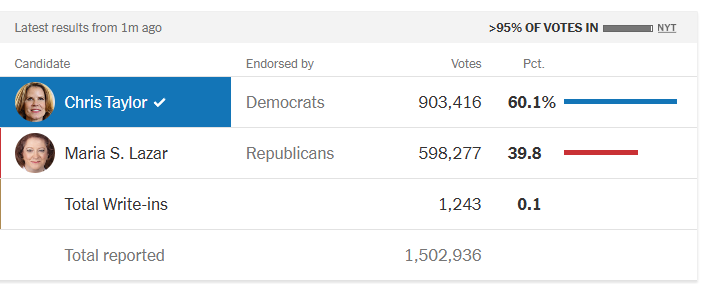
So, believe me when I tell you that this is a BFD. "Liberal Chris Taylor cruises to Wisconsin Supreme Court win."


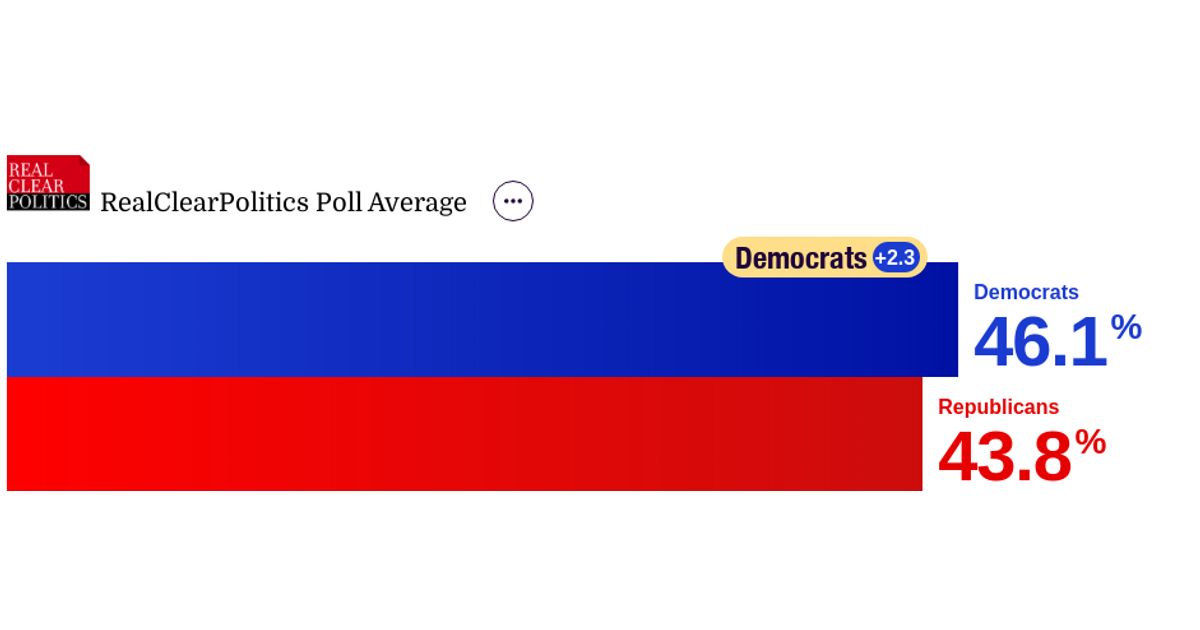
Not only have progressives flipped the script on the court races, they have also piled up huge margins in a state that is usually on the razor's edge. Taylor won more than 60% of the vote in a state that Trump won in 2024. Liberals now have a 5-2 majority on the court. Taylor's win means liberals will control the state Supreme Court until at least 2030.

Digging down a bit, the demographic shifts carry ominous signs for Republicans. Nate Cohn writes: "Liberal candidates have fared well in Wisconsin Supreme Court elections in recent years, but Chris Taylor's victory tonight was even bigger. She swept many reliably Republican working class areas " and might even crack the traditionally conservative suburban counties around Milwaukee." Democrats are also noting that 12 counties that went red in 2025's election swung blue last night.

As we've seen elsewhere, the Latino vote seems to have shifted to the left, while the liberal candidate won former GOP strongholds like Ozaukee County (where I live).

So, as usual, onepigironheadedsmoothbrainaut is left with ...

Drudge Retort

Home | Breaking News | Comments | User Blogs | Stats | Back Page | RSS Feed | RSS Spec | DMCA Compliance | Privacy